
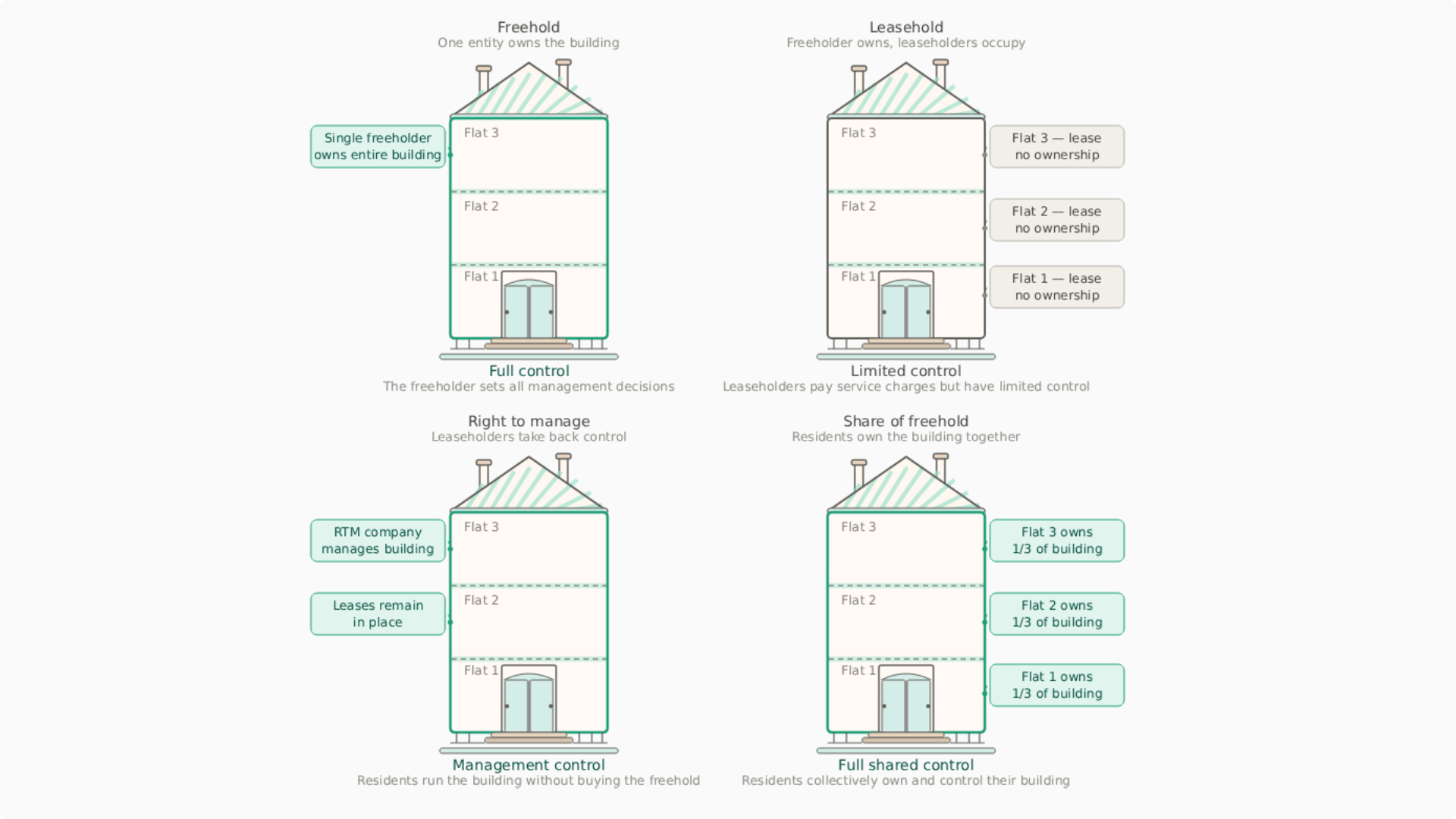
If you are buying a flat in the UK, you have probably heard the terms freehold and leasehold. Understanding the difference is not just legal jargon — it shapes how much control you have over your home, what you pay in the long run, and how easy it is to sell or remortgage later.
This guide breaks down freehold vs leasehold in plain language and gives you a practical framework for making the right choice.
What Does Freehold vs Leasehold Mean in the UK?
With freehold, you own the building and the land it sits on outright. There is no time limit and no landlord above you. With leasehold, you own the right to live in the property for a set number of years. The freeholder owns the building and land, and you pay them ground rent and service charges for the upkeep of shared parts.
In the UK, most flats are leasehold. For flat buyers, the question is rarely "freehold or leasehold?" but rather "what kind of leasehold am I getting, and could I ever have a share of freehold?"
How Freehold vs Leasehold Affects Your Costs
With a leasehold flat, you will usually pay a service charge and sometimes ground rent. Those costs can rise over time, and you have limited say unless you are part of a residents' group or right to manage company. With a share of freehold, you and the other owners decide how much to spend and on what.
Lease length also matters. A short lease — under 80 years — can make remortgaging and selling harder and more expensive. When comparing freehold vs leasehold, think about total cost of ownership over 10 or 20 years, not just the purchase price.
Control, Rights, and Disputes
Tenure directly affects your say in how the block is run. In a standard leasehold setup, the freeholder or their managing agent makes most of the strategic decisions. You have rights under the lease and under law — to be consulted on major works and to challenge unreasonable charges — but you do not call the shots.
With freehold or share of freehold, residents typically control management, subject to the law and your own rules. That is why disputes often flare where leaseholders feel ignored or overcharged.
How Tenure Affects Selling and Remortgaging
Lenders and buyers both look at tenure. A long lease and a well-managed block are easier to finance and sell. A short lease or a block with known disputes can slow things down or reduce the price.
If you are comparing freehold vs leasehold options, consider your time horizon. Are you planning to stay five years or twenty? Could leasehold reform change the rules during that time? These factors do not always favour one tenure over the other — they favour being well informed.
A Simple Decision Framework
Rather than "always avoid leasehold" or "freehold is always better", think in terms of risk and control. Is the lease long enough? Is the management transparent and accountable? Are service charges and reserves in good shape?
If the block is leasehold but well run and the lease is long, it can still be a sound purchase. If you have the option of a share of freehold and the other owners are organised, that can offer more control — but only if the governance is clear and sustainable. In 2026, staying up to date with leasehold reform helps you weigh the options in light of future rules.
How Freehold.Pro Helps
If you have a share of freehold or are part of an RTM company, Freehold.Pro gives you the tools to run your building properly — without relying on a managing agent.
Try Freehold.Pro free, no contract required. Get started today.